How Self-Talk Shapes Your Mental Health Daily

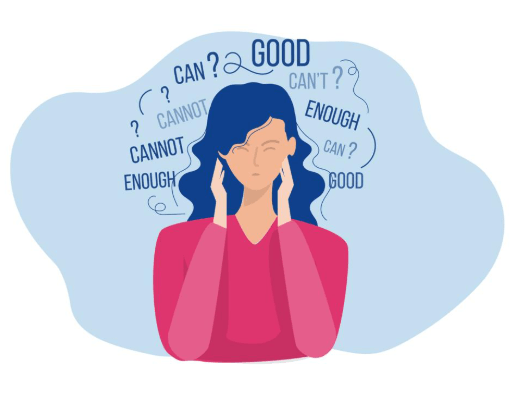
Most people would never speak to a friend the way they speak to themselves. The quiet, relentless commentary running through your mind every day, the judgments about mistakes, the predictions of failure, the comparisons to others, shapes how you feel, how you perform, and even how healthy you are. Understanding that inner voice is one of the most underrated skills in mental wellness.
This article breaks down what self-talk actually is, why it carries so much psychological weight, how patterns of negative self-talk form, and what the research says about changing them. Whether you catch yourself ruminating at night or quietly talking yourself out of opportunities during the day, knowing how this process works is the first step toward something better.
What Self-Talk Really Means
Self-talk refers to the internal monologue you carry on with yourself throughout the day. It is not just the dramatic moments of self-criticism after a big mistake. It is also the small, almost automatic thoughts that arise when you look in the mirror, send an email, or sit in a meeting. Some of these thoughts are neutral or even encouraging. Others are quietly corrosive.
Psychologists generally divide self-talk into two broad categories: positive and negative. Positive self-talk does not mean toxic optimism or pretending problems do not exist. It means speaking to yourself with the same basic fairness and compassion you would offer someone you respect. Negative self-talk, on the other hand, tends to be exaggerated, absolute, and repetitive. It often takes the form of cognitive distortions, which are habitual errors in thinking that feel true but are not.
Common Patterns of Negative Self-Talk
Negative self-talk rarely announces itself clearly. It tends to disguise itself as realism or humility. Recognizing its patterns is genuinely useful because you cannot challenge a thought you have not identified. Below are some of the most common forms it takes.
- Catastrophizing: Assuming the worst possible outcome is the most likely one. A single awkward conversation becomes proof that everyone dislikes you.
- All-or-nothing thinking: Viewing situations in black and white with no middle ground. If something is not perfect, it is a complete failure.
- Overgeneralization: Drawing sweeping conclusions from a single event. Making one error means you always make errors.
- Mind reading: Assuming you know what others think, usually that they are judging you negatively, without any real evidence.
- Filtering: Focusing exclusively on the negative details of a situation while ignoring anything positive or neutral.
- Personalization: Blaming yourself for things outside your control, or assuming that others’ behavior is always a reaction to you.
These patterns are not character flaws. They are learned habits of mind, often developed as protective responses to stress, criticism, or uncertainty during formative years. The brain is efficient, and it tends to replay familiar mental scripts even when those scripts are inaccurate. That is exactly why awareness matters so much.
The Real Impact on Mental and Physical Health
The connection between inner dialogue and mental health outcomes is well-documented. Research published in Clinical Psychology Review found that repetitive negative thinking is a transdiagnostic risk factor, meaning it contributes to anxiety, depression, and other conditions across the board, not just one specific disorder. This is significant because it suggests that changing how you talk to yourself could have broad benefits across multiple areas of wellbeing.
The effects are not limited to mood. Chronic negative self-talk is associated with elevated cortisol levels, which is the body’s primary stress hormone. Sustained high cortisol has downstream effects on sleep quality, immune function, cardiovascular health, and even memory. So when someone dismisses their inner critic as harmless background noise, the biology suggests otherwise.
On the positive side, studies on self-compassion, particularly the work of researcher Kristin Neff at the University of Texas at Austin, show that treating yourself with kindness during difficulty is linked to greater emotional resilience, lower anxiety, and higher motivation. Counterintuitively, being gentler with yourself tends to produce better outcomes than harsh self-criticism, which many people mistakenly believe keeps them sharp and accountable.
Negative Self-Talk Versus Constructive Self-Reflection
One concern people often raise is whether softening their inner critic means lowering their standards or ignoring genuine problems. This is a fair concern, and it points to an important distinction. There is a real difference between negative self-talk and honest self-reflection.
| Negative Self-Talk | Constructive Self-Reflection |
| Global and absolute: ‘I am terrible at this.’ | Specific and actionable: ‘That approach did not work. What can I adjust?’ |
| Focuses on identity and worth | Focuses on behavior and outcomes |
| Emotionally escalating and repetitive | Calm, time-limited, and forward-looking |
| Discourages effort: ‘There is no point in trying.’ | Encourages effort: ‘This is difficult, but I can improve with practice.’ |
| Often triggered automatically | Intentionally chosen in response to a situation |
| Leaves you feeling worse with no clear benefit | Leaves you with information you can actually use |
The goal is not to eliminate all self-criticism. Honest feedback from your own mind is valuable. The goal is to strip out the exaggeration, the global judgments about your worth, and the repetitive loops that serve no practical purpose. Constructive self-reflection helps you learn. Negative self-talk mostly just hurts.
Practical Strategies for Shifting Your Inner Dialogue
Changing deeply ingrained thought patterns takes real effort and consistency. It is not something that happens after one journaling session or a single moment of insight. But there are evidence-based approaches that genuinely work when practiced over time.
Cognitive Restructuring
Cognitive restructuring, a core technique in cognitive behavioral therapy, involves identifying a specific negative thought, examining the evidence for and against it, and then forming a more accurate and balanced version. For example, if the thought is ‘I always say the wrong thing,’ you would ask: Is that literally always true? What are examples where that was not the case? What would I say to a friend who said this about themselves? The replacement thought does not have to be cheerful. It just has to be fair.
Distancing Techniques
Research by Ethan Kross at the University of Michigan has shown that referring to yourself in the third person during stressful self-reflection reduces emotional intensity and improves performance. Instead of ‘Why am I so anxious about this?’, you might ask ‘Why is Sarah anxious about this?’ It sounds odd, but it creates psychological distance from the emotion, making it easier to think clearly. This technique, called self-distancing, can also involve imagining looking back on a current situation from years in the future, which helps shrink the perceived importance of whatever is going wrong.
Building Awareness Before Trying to Change
Many people try to suppress or argue with negative thoughts the moment they appear, which can actually intensify them. A more effective first step is simply noticing. When a harsh thought arises, labeling it without judgment, ‘There is that all-or-nothing thinking again’, creates a small but meaningful gap between the thought and your response to it. Over time, that gap becomes easier to use. Mindfulness-based practices support this kind of observation and have substantial research backing for reducing rumination.
Making the decision to stop talking negatively about yourself is genuinely worthwhile, but it works best when paired with concrete techniques rather than willpower alone, because the automatic nature of these thoughts means good intentions are rarely enough without a structured approach.
When to Seek Professional Support
Self-directed strategies are a strong starting point for many people. But there are situations where negative self-talk is severe enough, or entrenched enough, that working with a trained mental health professional makes a meaningful difference. A therapist trained in cognitive behavioral therapy, acceptance and commitment therapy, or compassion-focused therapy can provide tools tailored to your specific patterns and help you stay accountable during the process.
Signs that professional support may be worth pursuing include persistent self-critical thoughts that interfere with sleep or daily functioning, self-talk that includes thoughts of worthlessness or hopelessness, or a sense that the inner critic has been present for so long that you cannot imagine thinking any other way. None of these are signs of weakness. They are signals that the problem deserves more targeted attention.
The way you talk to yourself is not fixed. It is a habit, shaped by experience and reinforced by repetition, which means it can also be reshaped. The mind is not a passive observer of your circumstances. It is an active participant in how you experience them. Treating that internal voice with the same seriousness you would give any other health habit is, by most measures, one of the highest-return investments in long-term wellbeing.