Right vs. Wrong: How Moral Reasoning Shapes Mental Health

Most people have felt it at some point: a quiet but persistent discomfort after making a choice that did not quite sit right. That feeling is not random noise. It is moral reasoning at work, and it has a much stronger grip on mental health than most people realize. The connection between how we think about right and wrong and how we feel emotionally is one of the more underexplored areas of everyday psychological life.
This article looks at what moral reasoning actually is, how it develops across a lifetime, the ways it intersects with emotional wellbeing, and what happens when a person’s internal sense of right and wrong comes into conflict with their behavior or their environment. Whether you are a student, a professional working through difficult workplace decisions, or simply someone who has ever lost sleep over a choice you made, understanding this connection can offer genuine clarity.
What Moral Reasoning Actually Means
Moral reasoning is the cognitive process people use to evaluate whether an action is right or wrong, fair or unfair, harmful or acceptable. It is not a single moment of judgment. It is an ongoing mental process that draws on personal values, cultural norms, emotional responses, and past experiences. Psychologist Lawrence Kohlberg built on Jean Piaget’s earlier work to propose a six-stage model of moral development, ranging from basic obedience motivated by avoiding punishment all the way to principled reasoning based on universal ethical concepts.
Kohlberg’s research, conducted across decades beginning in the 1950s, found that most adults function primarily at the conventional level of moral reasoning, meaning they make decisions based on maintaining social order and meeting the expectations of those around them. Relatively few people consistently reach what he called post-conventional reasoning, where personal principles can override social rules. This matters for mental health because people operating at different levels experience moral conflict very differently.
How Moral Conflict Creates Psychological Distress
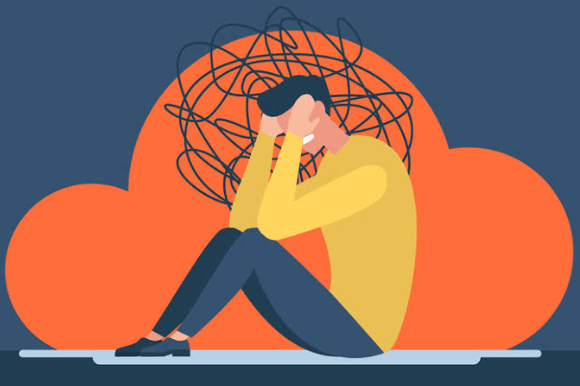
When a person acts in a way that contradicts their own values, a predictable set of psychological consequences tends to follow. Researchers refer to this as moral injury, a term originally developed in the context of military combat but now applied much more broadly. Moral injury describes the damage done to a person’s sense of self when they participate in, witness, or fail to prevent an event that violates their deeply held moral beliefs.
A 2019 systematic review published in the journal PLOS ONE, covering studies involving over 5,000 participants across military and civilian populations, found that moral injury was significantly associated with depression, post-traumatic stress symptoms, and suicidal ideation. The connection is not trivial. When a person’s moral framework is damaged, their sense of identity often destabilizes along with it.
Moral conflict does not require extreme circumstances. Everyday situations produce it too. A nurse who is forced by staffing shortages to provide care she considers inadequate, a manager asked to deliver a policy he believes is unfair, a teenager pressured by peers to exclude someone from a group: all of these scenarios activate moral distress. The intensity varies, but the psychological mechanism is the same.
The Difference Between Guilt and Shame
One of the most important distinctions in the psychology of moral reasoning is the difference between guilt and shame. These two emotions are often used interchangeably in everyday conversation, but they operate very differently and have very different effects on mental health.
| Emotion | Focus | Self-Assessment | Typical Behavioral Response | Mental Health Impact |
| Guilt | A specific behavior or action | “I did something bad” | Motivation to repair, apologize, or change behavior | Generally adaptive when moderate |
| Shame | The entire self | “I am bad” | Withdrawal, hiding, or defensive aggression | Linked to depression and anxiety |
Research by social psychologist June Price Tangney, published across multiple studies beginning in the 1990s, established that guilt tends to be a more constructive emotion. People who feel guilty about a specific action are more likely to take responsibility and try to make amends. Shame, by contrast, tends to produce either withdrawal or externalizing behavior such as anger and blame. Chronic shame is consistently linked to higher rates of depression, anxiety, and low self-esteem. Understanding which emotion is actually driving a person’s distress can make a meaningful difference in how that distress is addressed.
Values Alignment and Emotional Wellbeing
There is a growing body of evidence suggesting that living in alignment with one’s core values is a significant contributor to psychological wellbeing. Acceptance and Commitment Therapy, or ACT, is one of the most empirically supported therapeutic approaches of the past three decades, and values clarification sits at its center. The idea is not that people need to be morally perfect. It is that a clear sense of what matters to them, combined with behavior that moves toward those values rather than away from them, produces a more stable and satisfying inner life.
This is where a working understanding of morals and ethics becomes genuinely useful. The distinction between personal moral convictions and broader ethical frameworks, such as professional codes or societal standards, can help a person identify exactly where a conflict is originating. Is the distress coming from a violation of something they personally believe is wrong? Or is it coming from an external standard they have not yet examined for themselves? The answer shapes how the conflict can be resolved.
People with greater clarity about their values tend to make decisions with less internal conflict and recover more quickly from difficult choices. A 2021 study in the Journal of Personality and Social Psychology found that participants who scored higher on measures of value clarity reported significantly lower levels of daily stress and higher life satisfaction, independent of the content of those values. It is the clarity itself, not the specific moral positions held, that appears to be protective.
When Moral Reasoning Goes Wrong
Moral reasoning is not always a healthy process. Several patterns of distorted moral thinking can themselves become sources of psychological harm.
- Moral perfectionism: holding oneself to an impossibly high standard and treating any failure as a catastrophic personal flaw rather than a human mistake.
- Moral rigidity: applying absolute rules to every situation regardless of context, which can produce unnecessary guilt and damage relationships.
- Moral disengagement: using cognitive mechanisms to deactivate the usual moral standards, for example by minimizing the harm caused or dehumanizing those affected, which can allow harmful behavior to continue without triggering distress.
- Scrupulosity: a specific pattern, sometimes associated with OCD, in which a person experiences obsessive and distressing concerns about moral or religious transgressions, often for actions that most people would not consider wrong at all.
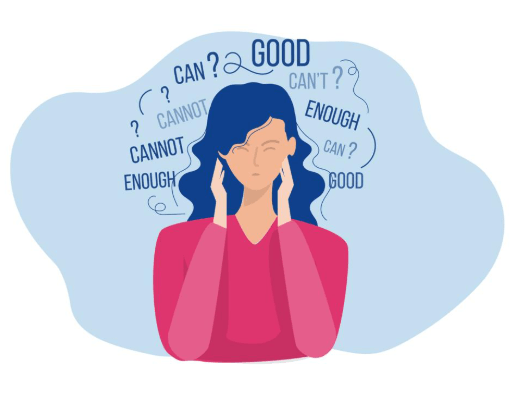
Each of these patterns can contribute to ongoing anxiety, depression, or interpersonal difficulties. Moral perfectionism, for example, often fuels relentless self-criticism that looks very similar to generalized anxiety. Scrupulosity can be debilitating and is frequently misunderstood by both the person experiencing it and the people around them. Recognizing that distorted moral reasoning is a real clinical concern, not just a character flaw, is an important step toward addressing it.
Supporting Healthier Moral Reasoning
Healthier moral reasoning does not mean abandoning principles or becoming indifferent to right and wrong. It means developing a relationship with one’s values that is thoughtful, flexible, and self-compassionate. Several practices are consistently supported by research as helpful in this area.
- Reflective journaling: writing about a moral conflict in detail, including the competing considerations involved, tends to reduce emotional intensity and improve decision clarity.
- Perspective-taking exercises: deliberately considering how a trusted person with different experiences might view the same situation can interrupt rigid or catastrophic moral thinking.
- Self-compassion practices: research by Kristin Neff at the University of Texas at Austin consistently shows that people who extend compassion to themselves after mistakes are better positioned to take responsibility and change behavior than those who respond with harsh self-judgment.
- Talking with a therapist: for moral distress, moral injury, or scrupulosity, working with a mental health professional trained in evidence-based approaches such as ACT or Cognitive Behavioral Therapy can be especially effective.
- Examining the source of a belief: asking whether a particular moral rule was consciously chosen or simply absorbed from family, culture, or peer pressure can help a person decide whether it actually reflects their values.
None of these approaches require a person to abandon their convictions. The goal is a more conscious, grounded relationship with those convictions, one that supports wellbeing rather than undermining it. Moral reasoning, when it is working well, is not a source of chronic distress. It is a guide. The difference between moral reasoning as a guide and moral reasoning as a burden often comes down to the flexibility and self-awareness a person brings to the process.
The inner life of someone genuinely trying to do right by themselves and others is rarely simple. But understanding the psychological machinery behind that effort, how moral reasoning develops, where it can go wrong, and how it connects to emotional health, makes that effort considerably less lonely and considerably more effective.