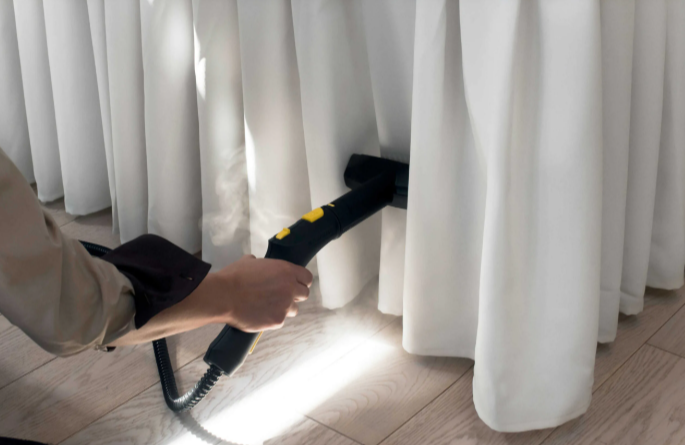
How Often Do You Need to Wash an Antimicrobial Curtain?

Having an antimicrobial curtain doesn’t mean it will never need to be washed or cleaned. This treatment can help reduce microbial growth, but regular care is still necessary.
So, the question is: How often should I clean it?
There is no one fixed answer. The frequency of cleaning a curtain depends on the room, usage, visible soiling, and facility policy. Privacy curtains in healthcare settings can be frequently touched surfaces, so it is important to check their condition regularly.
The Short Answer
Antimicrobial curtains should be cleaned according to the facility’s approved cleaning schedule. If the curtain is visibly dirty or soiled, don’t wait for the scheduled date. In such cases, cleaning or replacement may be necessary sooner.
The manufacturer’s care instructions should also be followed, as each fabric and antimicrobial treatment’s requirements may vary.
Why Antimicrobial Does Not Mean Maintenance-Free
Antimicrobial treatment does not make curtains self-cleaning. Dust, visible soil, and other things can still accumulate on the curtain. The fabric can also gradually wear down with daily use.
Therefore, the antimicrobial feature should be considered an additional support. It is not a replacement for regular cleaning and maintenance.
What Should Decide the Cleaning Frequency?
Not every curtain needs to be washed on the same schedule. In some areas, curtains are used more frequently.
When deciding the cleaning frequency, consider these factors:
- Room usage frequency: How often is the room used?
- Touch frequency: How often is the curtain touched?
- Visible soiling: Is the curtain visibly soiled or not?
- Infection-control policy: What is the facility’s infection-control policy?
- Manufacturer’s care instructions: What do the manufacturer’s care instructions say?
These factors help to create a practical cleaning schedule.
When Should You Wash It Immediately?
If the curtain is visibly dirty, it is not appropriate to leave it until the normal schedule. In the event of heavy soil, visible contamination or damage, the curtain should be handled promptly.
In some situations, cleaning is sufficient, while in others, replacement may be a better option. The facility should regularly inspect the condition of the curtain so that the problem can be addressed before it escalates.
Washing Is Not Always the Only Option
Not every curtain is washable textile. Some facilities use reusable textile curtains. These curtains can be cleaned using an approved laundering process.
On the other hand, Disposable Hospital Curtains can be managed through a changeout and replacement process rather than washing. Therefore, it is important to understand the curtain type before creating a cleaning plan.
What About Disposable Cubicle Curtains?
Disposable Cubicle Curtains can be practical for facilities where minimizing the laundering process is important.
When a curtain has reached its intended use period or needs replacement, the facility can handle it according to its approved disposal or recycling process.
This option can reduce the problem of washing frequency, but regular inspection is still necessary.
Follow the Manufacturer’s Instructions
Not every antimicrobial treatment is the same. Some treatments are designed with specific washing methods in mind, while other fabrics may require specific temperatures or cleaning products.
Therefore, one general washing method should not be applied to every curtain. Following manufacturer instructions can help maintain the curtain’s performance and expected lifespan.
When Does Replacement Make More Sense?
Washing every curtain repeatedly is not always the best solution. If the fabric is excessively worn, damaged, or losing its condition due to repeated use, replacement may be more practical.
In such cases, Curtain Replacement Service can be useful for a facility, especially when multiple rooms or large areas require changeout. Planned replacement helps make maintenance more organized.
Managing Large Curtain Changeouts
In large healthcare and commercial facilities, it can be difficult to manage each curtain individually.
Full-Service Curtain Changeout can be a useful approach to planned maintenance. A facility can plan changeouts based on its rooms, usage, and operational schedule.
This eliminates the need for staff to manage each curtain replacement separately.
Facilities can consider On the Right Track Full-Service Curtain Changeout for their planned curtain replacement needs.
Commercial Facilities Need a Different Plan
Commercial Curtain Changeout needs also depend on the size and daily activity of the facility. In high-use spaces, it is helpful to monitor the condition of the curtains through regular inspections.
If changeout of multiple rooms is required at once, scheduled service can help minimize disruption.
On the Right Track Commercial Curtain Changeout solutions curtain maintenance on a large scale can help manage the facility in a more organized manner.
A Simple Cleaning Plan Can Help
It is useful for a facility to have a simple curtain care plan.
This plan can include the following:
- Regular curtain inspection
- Visible soiling check
- Approved cleaning process
- Replacement schedule
- Manufacturer care instructions
This reduces the need for staff to make new decisions in every situation.
Should You Wash on a Fixed Schedule?
Fixed schedules can be useful, but the actual condition of the curtain should not be ignored. Some curtains may require cleaning or replacement earlier than scheduled. Other curtains may be usable for longer periods of time in normal condition. The best approach is to combine regular inspections with facility policy.
Final Answer
So, how often should I clean an antimicrobial curtain?
Antimicrobial curtains should not be washed less often just because they have an antimicrobial treatment. Cleaning frequency should be consistent with room usage, curtain condition, facility policy, and manufacturer instructions.
If a reusable curtain is visibly soiled, damaged, or requires cleaning, it should be handled in accordance with an approved process. Disposable Hospital Curtains or Disposable Cubicle Curtains may be suitable alternatives for some facilities if frequent washing is not practical.
On the Right Track Curtain Replacement Services may also be considered by larger facilities for planned maintenance. The right approach is one where cleaning, inspection, and timely replacement are managed as a simple and practical system.