Artificial Grass for Backyards: What You Need to Know

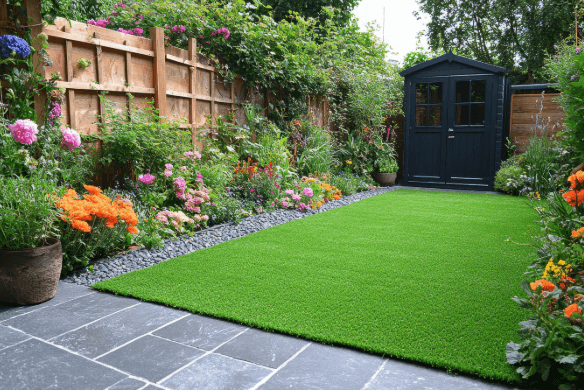
Most homeowners start researching artificial grass after one too many weekends spent patching dead spots, dragging hoses around, or watching a water bill climb during a dry summer. The idea sounds appealing, but the process of actually choosing and installing synthetic turf raises a lot of questions. How long does it last? What goes underneath it? Does it get unbearably hot? This article walks through the practical realities of backyard artificial grass, from the materials involved to the installation steps to the long-term maintenance reality.
How Artificial Grass Is Actually Constructed
Synthetic turf is not a single product. It is a layered system, and understanding what those layers do helps explain why quality and pricing vary so widely. At the surface, you have the pile, which is the visible blades made from polyethylene, polypropylene, or nylon fibers. Polyethylene is the most common choice for residential backyards because it is soft underfoot and holds up well against foot traffic and UV exposure. Polypropylene is harder and generally used for putting greens or lower-traffic areas. Nylon is the most durable but also the most expensive and tends to feel firmer.
Beneath the pile sits the backing, which is what the blades are tufted into. A good backing system typically uses two layers: a primary backing that holds the fibers in place, and a secondary coating, often polyurethane, that reinforces the structure and supports drainage holes. The drainage capacity of that backing matters more than most buyers initially realize. Poor drainage leads to pooling, odor buildup, and a muddy substrate, which defeats much of the purpose of going artificial in the first place.
Infill is the third major component. This is the granular material spread between the blades to support the fibers, add weight, and cushion the surface. Crumb rubber, silica sand, and organic infills like cork or coated sand are the most common options. Each has trade-offs around heat retention, cost, and how the surface feels. Crumb rubber is widely used but has faced scrutiny over heat absorption. Silica sand runs cooler and is straightforward to source. Organic infills are increasingly popular for households with children or pets.
The Ground Preparation Phase: Why It Matters So Much
Skipping or rushing the ground preparation is the single most common reason a backyard turf installation fails before its time. The process begins with removing existing grass, roots, and organic material down to a stable mineral soil base. If organic material is left in place, it continues to decompose, which can cause the surface to settle unevenly over time.
After excavation, a crushed aggregate base, typically decomposed granite or crushed miscellaneous base, is compacted in layers to create a firm, level, well-draining foundation. The standard depth is around three to four inches for residential applications, though softer play areas may use additional padding layers. Getting this right requires proper compaction equipment and some experience reading the grade of the yard so that water flows away from structures rather than pooling in corners.
In regions with clay-heavy soils, installers sometimes add a weed barrier or install French drains before laying the base. Clay does not drain naturally, so without some intervention, water can saturate the base and cause long-term problems. This is one of the areas where local knowledge pays off significantly. SoCal turf contractors familiar with regional soil conditions, including the clay-dense soils common in many Southern California neighborhoods, will plan the drainage layer accordingly rather than applying a one-size-fits-all approach.
Comparing Common Turf Options for Residential Backyards
Not every turf product is right for every backyard. The right choice depends on how the space gets used, whether pets are involved, how much direct sun the yard receives, and what the household’s budget looks like. The table below summarizes some of the most common product categories and their general characteristics.
| Turf Type | Primary Fiber | Best Use Case | Approx. Pile Height | General Cost Range (per sq ft installed) |
| Landscape Turf | Polyethylene | General backyard use, aesthetics | 1.5 to 2 inches | $12 to $20 |
| Pet Turf | Polyethylene with antimicrobial backing | Dogs and high-use areas | 1.25 to 1.75 inches | $14 to $22 |
| Putting Green Turf | Nylon or polypropylene | Golf practice surfaces | 0.25 to 0.5 inches | $18 to $30 |
| Play Area Turf | Polyethylene with foam pad underlay | Children’s play zones | 1.5 to 2 inches | $15 to $25 |
| Low-Pile Landscape | Polyethylene | High-traffic paths, minimal mowing look | 0.75 to 1.25 inches | $10 to $18 |
Installed cost estimates can shift considerably depending on the complexity of the yard, the amount of base preparation needed, and local labor rates. The figures above reflect general ranges for professional installation in the United States and are not intended as quotes.
The Heat Question: Does Synthetic Turf Get Too Hot?
This is one of the most-asked questions, and the honest answer is yes, artificial grass can get significantly hotter than natural grass under direct sun. Research published in various turfgrass journals has documented surface temperatures on synthetic turf reaching 150 to 180 degrees Fahrenheit on hot sunny days, compared to natural grass surfaces that tend to stay much closer to ambient air temperature due to evaporative cooling.
That said, the heat issue is manageable through a few approaches. Choosing a lighter-colored turf helps, since darker green blades absorb more solar energy. Infill selection also plays a role. Coated sand infills and organic options like Durafill or cork tend to run noticeably cooler than crumb rubber. Some manufacturers have developed heat-reflective fiber technology that helps reduce surface temperature, though these products typically carry a premium price.
Shade from trees, pergolas, or shade sails also reduces the heat issue substantially. For families who plan to use the backyard actively during summer afternoons, incorporating shading into the overall landscape design is worth thinking through before finalizing the turf installation.
Maintenance: What Changes and What Stays the Same
One of the appeals of synthetic turf is the reduction in ongoing maintenance. Mowing, edging, and fertilizing go away entirely. Watering requirements drop to almost nothing, which is meaningful in drought-prone regions. According to the Environmental Protection Agency, the average American household uses about 30 percent of its water consumption on outdoor irrigation. Eliminating or drastically reducing that figure adds up in both water savings and cost over time.
However, synthetic turf is not zero-maintenance. Pet owners need to rinse the surface regularly to manage odor and keep bacteria from accumulating in the infill. Leaf debris and organic matter should be cleared periodically, particularly under trees, since decomposing organic material can create conditions that support weed germination through the backing or around the edges. The pile itself benefits from occasional brushing with a stiff-bristle broom or a power broom to keep fibers upright, especially in high-traffic areas where blades can flatten over time.
- Rinse pet areas with water every few days and treat with an enzyme-based cleaner monthly.
- Use a leaf blower or rake to remove debris from trees or surrounding plants.
- Brush the pile with a stiff broom every few weeks in high-traffic zones to prevent matting.
- Inspect seams and edges two to three times per year; re-secure any lifting sections promptly.
- Check infill distribution annually and add material if it has shifted or compacted unevenly.
- Avoid parking vehicles, placing hot grills, or setting down sharp objects directly on the turf surface.
Lifespan and What Affects It
Most quality residential artificial grass products carry manufacturer warranties ranging from eight to fifteen years, and well-maintained installations regularly last fifteen to twenty years before significant fiber degradation sets in. The factors that shorten turf life the fastest include heavy concentrated foot traffic on the same areas without rotation, poor drainage that keeps the backing wet for extended periods, and UV exposure without UV-stabilized fibers.
The base installation quality has an outsize effect on longevity as well. A turf product sitting on a poorly compacted or improperly graded base will develop low spots, drainage issues, and visible wear patterns faster than the same product installed on a well-prepared foundation. Investing in proper installation upfront is one of the highest-return decisions a homeowner can make when it comes to getting full value from the product.
At the end of its useful life, synthetic turf does require disposal. Some installers and manufacturers offer take-back or recycling programs, and this is worth asking about when selecting a product. Recycling programs for synthetic turf have expanded over the past decade as the industry has grown, but they are not yet universal, so doing a bit of research on end-of-life options before purchasing is a reasonable precaution.
Backyard artificial grass installations vary widely in outcome depending on product quality, site preparation, and local climate conditions. Doing the research upfront, understanding what the different materials actually do, and asking the right questions before signing a contract will make the difference between an installation that performs well for fifteen-plus years and one that starts showing problems within a few seasons. The fundamentals covered here should give any homeowner a solid foundation for those conversations.