Social Anxiety vs. Shyness: Key Differences Explained

Most people feel a little nervous before a first date, a job interview, or a public speech. That flutter in the chest, the slight tremor in the voice, the urge to rehearse what you are going to say. It passes. But for millions of people, that feeling does not pass. It shows up at the grocery store, at a casual dinner with friends, or even before sending a simple email. Understanding why that happens, and whether it signals something beyond ordinary shyness, can genuinely change how a person approaches their own wellbeing.
This article breaks down the real differences between shyness and social anxiety disorder, explains how each one tends to show up in daily life, and outlines what the research says about who is affected and why. If you have ever wondered whether your social discomfort is typical or something worth paying closer attention to, the information here is a good place to start.
Shyness Is a Personality Trait, Not a Disorder
Shyness is one of the most common personality traits in humans. Researchers estimate that roughly 40 to 60 percent of adults consider themselves shy to some degree, according to data from the Stanford Shyness Clinic. It tends to involve a feeling of discomfort or apprehension in new social situations, particularly with strangers or large groups. A shy person might take longer to warm up in conversation, feel reserved at parties, or prefer one-on-one interactions over group settings.
Crucially, shyness is generally situational and manageable. It does not typically stop a person from doing what they need or want to do. A shy individual might feel awkward walking into a room full of unfamiliar faces, but they still walk in. They adapt, they adjust, and over time their discomfort often fades as familiarity grows. The trait does not usually interfere significantly with work, relationships, or daily functioning.
Shyness also tends to be stable across a lifetime without causing distress that the individual views as a problem. Many shy people simply accept it as part of who they are and function perfectly well. That distinction matters, because the clinical picture of social anxiety disorder looks quite different.
What Social Anxiety Disorder Actually Involves
Social anxiety disorder, sometimes called social phobia, is a recognized mental health condition. The American Psychiatric Association describes it as an intense, persistent fear of social situations in which the person believes they may be scrutinized, judged, embarrassed, or humiliated by others. The keyword there is persistent. This is not nerves that settle after a few minutes. It is fear that can last for hours before an event, throughout the event, and well after it is over.
The National Institute of Mental Health reports that social anxiety disorder affects approximately 12.1 percent of adults in the United States at some point in their lives, making it one of the most common anxiety disorders. It typically begins in the early to mid-teens and, without intervention, can persist for decades.
What separates social anxiety from shyness is not just the intensity of the discomfort but the degree to which it interferes with a person’s life. Someone with social anxiety disorder may avoid entire categories of activity: turning down promotions that require presenting to colleagues, skipping social events to the point of isolation, or experiencing physical symptoms so severe that they affect health. The fear is often recognized by the person as excessive or irrational, but recognizing that fact does not make the experience any less real or debilitating.
Comparing the Two: A Side-by-Side Look
Laying out the differences clearly can help a person reflect honestly on their own experiences. The table below highlights some of the most meaningful distinctions between typical shyness and social anxiety disorder.
| Feature | Shyness | Social Anxiety Disorder |
| Classification | Personality trait | Diagnosable mental health condition |
| Onset of discomfort | In unfamiliar or new situations | In a wide range of social or performance situations |
| Physical symptoms | Mild: slight blush, brief tension | Often severe: racing heart, sweating, nausea, trembling |
| Duration of fear | Fades as situation becomes familiar | Can persist before, during, and long after the event |
| Impact on daily life | Minimal to none | Significant: affects work, relationships, and routines |
| Avoidance behavior | Occasional and mild | Frequent and often disruptive |
| Personal distress | Usually low | Typically high; person often recognizes the fear as excessive |
| Need for treatment | Rarely | Often benefits from therapy, medication, or both |
Physical and Emotional Symptoms Worth Knowing
Social anxiety disorder is not purely a psychological experience. It produces real, measurable physical responses. When someone with the condition anticipates or enters a feared social situation, the body’s threat-response system activates in a way that mirrors how it would respond to actual physical danger. That mismatch between perceived threat and reality is part of what makes the condition so exhausting.
Physical Symptoms
- Rapid or pounding heartbeat
- Excessive sweating, particularly on the palms or face
- Trembling or shaking hands or voice
- Nausea or upset stomach before or during social events
- Blushing that feels uncontrollable
- Dizziness or lightheadedness
- Muscle tension, particularly in the shoulders, neck, or jaw
Emotional and Cognitive Symptoms
- Intense fear of being judged, criticized, or embarrassed
- Worrying for days or weeks before a social situation
- Replaying conversations afterward and fixating on perceived mistakes
- Difficulty making eye contact or speaking in groups
- A strong and recurring urge to leave or avoid social settings
- Fear that others will notice your anxiety, which then amplifies the anxiety
- Feeling like a spotlight is always on you, even in ordinary interactions
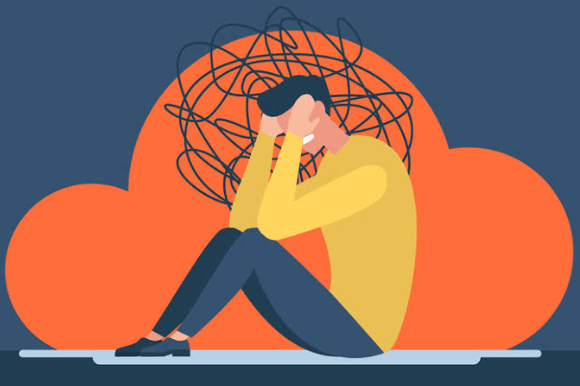
The cognitive loop that many people with social anxiety describe is particularly worth understanding. A person fears being judged, becomes hyper-aware of their own behavior, notices their heart racing or their hands trembling, and then fears that others will notice those signs, which makes the physical symptoms worse. It is a cycle that can be hard to break without structured support.
How Social Anxiety Connects to Other Challenges
Social anxiety rarely exists in complete isolation. Research consistently shows that it tends to co-occur with other mental health conditions, most notably depression and other anxiety disorders. The Anxiety and Depression Association of America notes that people with social anxiety disorder are significantly more likely to also experience major depressive disorder, generalized anxiety disorder, or panic disorder at some point in their lives.
There is also a well-documented relationship between social anxiety and substance use. Some individuals begin using alcohol or other substances as a way of managing social situations, a pattern sometimes described as self-medicating. While a drink before a social event might seem to help in the short term, the relief is temporary and the underlying anxiety often worsens over time. Repeated reliance on substances to cope with social fear can develop into a pattern that creates its own serious problems.
Recognizing these connections is not meant to be alarming. It is simply useful information. Understanding that social anxiety can have downstream effects on mood, relationships, and coping habits gives people more reason to take it seriously rather than writing it off as just being introverted or shy.
When to Take a Closer Look at Your Own Experience
One of the more challenging aspects of social anxiety is that it often develops gradually and can feel like a fixed part of someone’s personality rather than something that could change. People frequently spend years accommodating their anxiety rather than addressing it because they assume what they feel is just who they are. But shyness and social anxiety are genuinely different things, and the distinction carries real implications for how a person might choose to respond.
A few honest questions can help clarify the picture. Do social situations cause fear that feels disproportionate to the actual risk involved? Does anticipatory anxiety interfere with sleep, concentration, or daily plans? Have you turned down opportunities, whether professional or personal, specifically to avoid social discomfort? If the answer to questions like these is yes, it may be worth exploring further. One useful starting point is to find out if you have social anxiety through a structured self-assessment, which can help you reflect on your experiences in a more organized way before deciding on any next steps.
It is also worth knowing that social anxiety disorder responds well to treatment. Cognitive behavioral therapy, specifically a form called exposure therapy, has strong evidence behind it. Certain medications, including selective serotonin reuptake inhibitors, are also approved for treatment and work well for many people. The point is that this is not a condition people simply have to endure.
A Few Things That Are Often Misunderstood
Several common misconceptions tend to muddy the conversation around social anxiety, and clearing them up can help people think more accurately about what they or someone they care about might be experiencing.
- Social anxiety is not the same as introversion. Introverts prefer solitude and feel drained by social interaction, but they do not necessarily fear it. A person can be extroverted and still have social anxiety disorder.
- Having social anxiety does not mean a person is weak or lacks confidence in other areas of life. Many high-achieving, outwardly successful people live with unaddressed social anxiety.
- Social anxiety is not just about public speaking. While performance situations are a common trigger, the condition can also center on one-on-one conversations, eating in public, or even writing while others can see.
- Children can develop social anxiety disorder too, not just adults. When a child consistently refuses school, avoids peers, or has physical complaints before social events, social anxiety is worth considering.
- Avoiding the things that cause anxiety does not make it better. Avoidance reinforces fear over time. Structured, gradual exposure, ideally with professional guidance, is typically more effective.
Social anxiety sits on a spectrum, and how it affects each person depends on their history, their environment, and the specific situations that trigger it. What stays consistent is the core pattern: a fear of negative evaluation by others that is intense enough to disrupt how a person lives. That pattern is what separates the condition from ordinary human discomfort in social situations, and it is the pattern that points toward whether professional support might make a meaningful difference.