Kitchen Tile Flooring Installation: A Practical Guide to a Durable and Stylish Kitchen

The kitchen is one of the busiest rooms in any home. Between daily cooking, spills, foot traffic, dropped utensils, and frequent cleaning, the floor has to handle much more than simply looking attractive. That is why many homeowners consider kitchen tile flooring installation when planning a kitchen renovation or upgrading an outdated floor.
Tile can provide a strong combination of durability, easy maintenance, and design flexibility. However, achieving a polished result involves more than selecting an appealing pattern. Proper preparation, material selection, layout, and installation all influence how the finished floor looks and performs over time.
Why Tile Works Well in Busy Kitchens
Kitchen flooring needs to cope with conditions that are different from those in bedrooms or living areas. Water may splash near the sink, food can fall during meal preparation, and chairs may move across the same areas every day.
Tile is well suited to these demands because many tile materials resist moisture and everyday wear. A properly installed surface is also relatively simple to clean, making it practical for households where the kitchen sees constant activity.
Another advantage is versatility. Homeowners can choose from different sizes, textures, shapes, and visual styles. As a result, tile can complement kitchens ranging from traditional and rustic spaces to minimalist contemporary interiors.
See also: Montessori Preschool Near Me: How Practical Learning Supports Everyday Life Skills
Balancing Appearance and Everyday Function
A beautiful kitchen floor should also be comfortable to live with. Before selecting tile, consider how the kitchen is actually used.
A household that cooks frequently may prioritize stain resistance and straightforward maintenance. Families with children or pets may focus more heavily on durability and slip resistance. In an open-concept home, homeowners may want flooring that creates a smooth visual transition between the kitchen and adjoining spaces.
Thinking about these practical details early can prevent design decisions that look appealing initially but become inconvenient later.
Preparation Makes a Major Difference
The quality of the surface beneath the tile is critical. Tile requires a stable, level, and properly prepared foundation. Installing over an uneven or unsuitable surface can eventually contribute to cracked grout, loose tiles, or noticeable variations across the finished floor.
Existing flooring may need to be removed before installation begins. The subfloor should then be inspected for movement, moisture concerns, damage, and uneven sections.
Preparation may not be the most visually exciting part of a renovation, but it has a significant effect on long-term performance.
Planning the Tile Layout
Professional-looking floors usually begin with careful layout planning.
Starting without measuring the room can result in narrow tile pieces along highly visible walls or awkward transitions around cabinets and doorways. Instead, the room should be measured and key visual lines identified before installation starts.
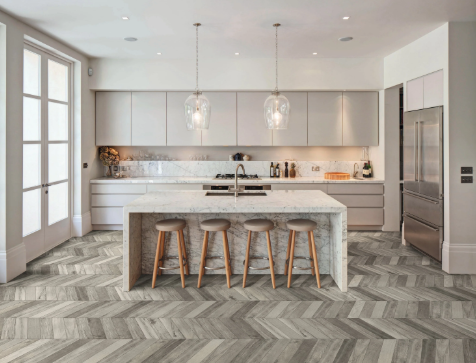
The tile orientation can also influence how spacious the kitchen feels. Depending on the tile shape and room dimensions, different layouts can emphasize the kitchen’s width, length, or architectural features.
Choosing Tile for the Kitchen Environment
Not every attractive tile is equally suitable for a kitchen floor. Homeowners should consider durability, surface texture, maintenance needs, and resistance to moisture.
Highly textured surfaces may offer additional traction but can require more effort to clean. Very smooth finishes can create a sleek appearance, although practical performance in wet areas should also be considered.
Colour matters as well. Light flooring can help make compact kitchens appear brighter, while darker shades can create visual depth. Neutral tones are often selected when homeowners want a floor that remains adaptable as cabinets, paint colours, and furnishings change.
Installation Details That Influence the Finished Look
Small installation decisions can have a surprisingly large visual impact. Consistent spacing helps produce clean grout lines, while accurate cuts around corners, cabinets, vents, and transitions contribute to a refined appearance.
Grout selection also deserves attention. A grout colour close to the tile shade can create a more continuous appearance. Greater contrast can emphasize the tile pattern and make individual pieces more noticeable.
For homeowners researching flooring options and installation guidance in their area, visiting a local flooring showroom can also make it easier to compare textures, sizes, and finishes in person.
Maintaining a Newly Tiled Kitchen Floor
Once installation is complete, routine maintenance is generally straightforward. Regular sweeping or vacuuming removes loose debris that could dull the surface over time. Spills should be cleaned promptly, particularly around cooking and food preparation areas.
Cleaning methods should also match the specific tile and grout being used. Harsh or inappropriate cleaning products can affect certain finishes, so understanding the material’s maintenance requirements is worthwhile.
Protect High-Traffic Areas
Simple habits can help preserve the floor. Entry mats can reduce the amount of grit carried into the kitchen, while protective pads beneath movable furniture can help minimize scratching.
Periodic attention to grout lines is also useful. Keeping grout clean contributes significantly to the appearance of the entire floor.
Creating a Kitchen Floor Built for Daily Life
A successful kitchen floor combines appearance with practical performance. Tile offers homeowners extensive design flexibility while providing the durability needed in a room that experiences spills, moisture, movement, and frequent cleaning.
Careful planning is just as important as the tile itself. From preparing the subfloor and selecting an appropriate surface to planning the layout and maintaining the finished installation, each decision contributes to the final result.
With thoughtful material choices and proper installation, a tiled kitchen floor can create a clean, functional foundation that supports everyday life while enhancing the overall character of the space.