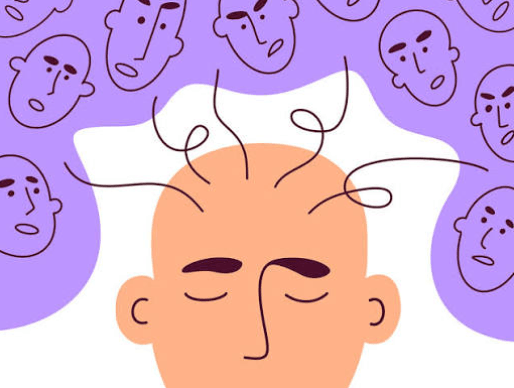
Why Family Members Trigger Emotional Reactions

You are sitting at the dinner table, everything seems fine, and then one comment from a family member sends your nervous system into overdrive. Your heart rate climbs, your jaw tightens, and suddenly you are either shutting down completely or saying things you will regret. If this sounds familiar, you are not alone, and you are not overreacting. Emotional triggers in family relationships are one of the most common and least understood sources of psychological distress that people experience throughout their lives.
This article breaks down what emotional triggers actually are, why family relationships produce them so reliably, how the brain processes these reactions, and what practical steps can help you respond rather than simply react. Understanding the mechanics behind these moments can be genuinely clarifying, even when the feelings themselves remain complicated.
What an Emotional Trigger Actually Is
The word ‘trigger’ gets used casually, but its psychological meaning is specific. An emotional trigger is any stimulus, whether a word, tone of voice, facial expression, or even a smell, that activates a strong emotional response rooted in a past experience. The current stimulus does not cause the emotion by itself. Instead, it acts as a cue that signals the brain to replay an emotional memory, often one stored during a formative or threatening moment.
The brain’s amygdala, a small almond-shaped region deep in the temporal lobe, plays a central role here. It processes emotional memories and scans the environment continuously for potential threats. When it detects something that resembles a past threat, it fires off a stress response before the rational prefrontal cortex has a chance to assess the situation clearly. This is why triggers feel so physical and so fast. The logic center of your brain is simply not driving at that moment.
Why Family Relationships Are Such a Rich Source of Triggers
Family bonds, particularly with primary caregivers, form the template through which people learn what to expect from close relationships. According to attachment theory, first developed by psychiatrist John Bowlby and later expanded by psychologist Mary Ainsworth, the patterns of connection or disconnection experienced in early childhood shape how the nervous system responds to intimacy, conflict, and rejection for decades afterward.
This is not a small effect. A 2019 review published in Frontiers in Psychology found that insecure attachment patterns formed in childhood are significantly associated with heightened emotional reactivity in adult relationships. When someone who provided both care and harm is involved, the brain holds genuinely conflicting associations with that person. Their presence alone can activate both comfort-seeking and threat-detection circuits simultaneously.
Questions like why does my mom trigger me often point to exactly this dynamic. A parent who was sometimes nurturing and sometimes critical, unpredictable, dismissive, or controlling creates what researchers call a disorganized attachment pattern. The child, and later the adult, never fully resolved how to feel safe around that person. Every interaction carries the residue of that unresolved tension.
Common Trigger Patterns in Parent-Child Relationships
Not all triggers look the same, and recognizing the pattern behind your own reactions can make them less bewildering. Several distinct dynamics tend to produce the strongest emotional responses in adult children dealing with parental relationships.
- Criticism framed as concern: When a parent consistently packages judgment inside expressions of worry, the adult child learns to associate care with inadequacy. A simple ‘Are you eating enough?’ can land as an attack on autonomy or body image.
- Unsolicited advice: Repeated advice-giving signals a lack of trust in the adult child’s competence. Over time, even well-meaning suggestions activate feelings of being controlled or infantilized.
- Comparison to siblings or others: Direct or implied comparisons activate shame circuits quickly, particularly if they were common in childhood.
- Emotional withdrawal or silent treatment: A parent who goes cold during conflict teaches the child that emotional expression is dangerous. As an adult, any sign of withdrawal from that parent can trigger panic or guilt.
- Boundary violations: Parents who routinely ignore stated limits, whether physical, emotional, or logistical, can trigger intense anger or helplessness in adult children who have spent years trying to establish healthier patterns.
- Revisiting old grievances: Bringing up past failures or mistakes keeps the adult child perpetually on trial, activating shame and defensive anger.
The Difference Between Being Triggered and Having a Reasonable Reaction
One question people often wrestle with is whether their strong reaction reflects a past wound or simply a reasonable response to genuinely bad behavior in the present. The honest answer is that it can be both at the same time, and distinguishing between them takes practice.
A useful framework is to assess proportionality and duration. If your emotional response feels significantly larger than the situation seems to warrant, or if it lingers for hours after the interaction, it is likely that older emotional material is being activated alongside the current one. This does not mean the current situation was acceptable. It means that the intensity of the reaction is carrying extra weight from the past.
| Characteristic | Triggered Response | Proportionate Reaction |
| Intensity | Feels overwhelming or physical; heart racing, dissociation, tearfulness | Uncomfortable but manageable; stays within the situation |
| Duration | Lingers for hours or days after the interaction | Fades relatively quickly once the situation resolves |
| Origin | Connected to older emotional memories | Rooted in the current event |
| Perspective | Difficult to consider the other person’s viewpoint | Able to hold some perspective even while upset |
| Body response | Strong fight, flight, or freeze activation | Mild stress response that settles down quickly |
What Happens Neurologically During a Triggered Moment
When a trigger fires, the hypothalamic-pituitary-adrenal axis, commonly called the HPA axis, initiates a stress hormone cascade. Cortisol and adrenaline flood the system. Blood flow is redirected away from the prefrontal cortex, which handles reasoning, empathy, and impulse control, toward the muscles and survival-oriented brain regions. This is the same biological process involved in responding to physical danger. The brain does not always distinguish between an emotional wound and a physical one.
Research using neuroimaging has shown that recalling emotionally painful memories activates some of the same neural circuits as physical pain. A 2011 study published in the Proceedings of the National Academy of Sciences found that social rejection activated regions of the brain associated with physical pain, specifically the secondary somatosensory cortex and the dorsal posterior insula. This is part of why being dismissed or criticized by a parent can feel so acutely physical, even as an adult.
Repeated exposure to a triggering dynamic without resolution can also contribute to lasting changes in how the nervous system regulates itself. This is sometimes described as a low threshold for activation, meaning the system becomes increasingly sensitive over time rather than habituating to the stress.
Practical Approaches for Managing Triggers in Family Interactions
Working with emotional triggers is not about eliminating the feelings. It is about building enough awareness and regulation capacity to respond thoughtfully rather than react automatically. Several evidence-informed approaches have shown real value for people dealing with family-based triggers.
Building Somatic Awareness
Because triggers manifest first in the body, learning to notice physical cues early can give you a window to intervene before the reaction escalates. This might mean recognizing that a tight chest or a sudden urge to leave the room is a signal worth paying attention to. Slowing your breathing, even briefly, can begin to dampen the HPA axis response before it fully takes hold.
Creating Enough Distance to Reflect
Temporarily stepping away from a triggering conversation, physically or mentally, gives the prefrontal cortex time to come back online. This is not avoidance. It is a regulatory strategy. Telling someone you need a few minutes before continuing a difficult conversation is a skill, and one that becomes easier with practice. Even five to ten minutes can meaningfully shift what your brain is capable of doing.
Psychotherapy and Trauma-Informed Support
For triggers that are deeply rooted in childhood experiences, working with a licensed therapist, particularly one trained in approaches like EMDR, somatic therapy, or attachment-focused therapy, can help reprocess the original memories that are driving the current reactions. This kind of work does not erase the past, but it can reduce the emotional charge carried by specific memories, making them easier to hold without being destabilized.
Setting Limits Without Cutting Off
One of the more complicated aspects of family triggers is that the relationship itself often still holds value, even when it is also a source of pain. Many people do not want to end contact with a parent; they want the dynamic to change. Communicating boundaries clearly, consistently, and without excessive explanation is a skill that requires practice. It also requires accepting that the other person may not respond well, at least initially.
Limits work best when they are tied to your own behavior rather than demands on the other person’s behavior. Saying ‘I will leave the conversation if it moves into criticism of my parenting’ is more sustainable than ‘You are not allowed to criticize me.’ One is something you can actually control. The other depends on compliance you cannot guarantee.
Emotional triggers in family relationships are not signs of weakness or instability. They are evidence that your nervous system learned something powerful from experiences that mattered deeply. Understanding what is actually happening, neurologically, psychologically, and relationally, changes how you relate to those moments. The goal is not to stop having feelings. It is to build enough understanding of them that they no longer run the show entirely.