Understanding Your Fertility Window Through Cycle Tracking

For people planning a pregnancy, understanding the menstrual cycle can make it easier to recognize when conception is most likely. Fertility is not constant throughout the month. It changes as the body moves through different stages of the cycle, with a relatively short period around ovulation when pregnancy is possible.
Learning to recognize this window does not require complicated calculations. Consistent cycle tracking, attention to physical changes and, when appropriate, ovulation tests can provide useful information about individual fertility patterns.
Why the Fertile Window Matters
Ovulation occurs when an ovary releases a mature egg. The egg remains available for fertilization for a relatively short period, while sperm can survive in the reproductive tract for several days. As a result, the fertile window begins before ovulation, not only on the day the egg is released.
According to the American College of Obstetricians and Gynecologists, pregnancy can occur from intercourse approximately five days before ovulation through about one day afterward. The highest chance of conception is associated with having viable sperm present when ovulation takes place.
This is one reason why simply choosing a single “ovulation day” may not provide the complete picture. Fertility tracking is more useful when it focuses on a range of potentially fertile days.
Start With Your Menstrual Cycle
The first step is keeping accurate records of menstrual periods. Cycle day one is the first day of menstrual bleeding, and the cycle continues until the day before the next period begins.
Recording this information over several months can reveal whether cycles tend to follow a predictable pattern. Some people have cycles that are similar in length from month to month, while others vary more.
Calendar calculations can estimate when ovulation may occur, but they should not be treated as an exact prediction. ACOG notes that ovulation generally occurs about 14 days before the next menstrual period, rather than necessarily occurring on day 14 for everyone.
This distinction matters especially for people with shorter, longer, or irregular cycles.
Signs That May Indicate Ovulation
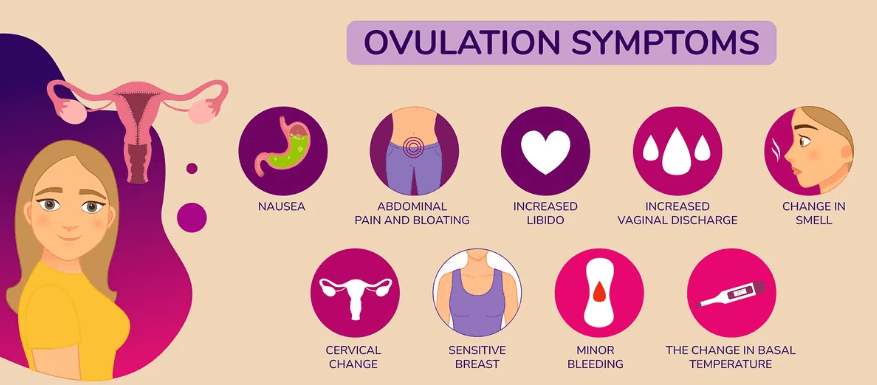
The menstrual cycle involves hormonal changes that can produce noticeable physical signs. One of the most useful is a change in cervical mucus.
In the days approaching ovulation, cervical mucus may become more abundant, clear, slippery, and stretchy. These changes create an environment that can help sperm move through the reproductive tract. After ovulation, the mucus typically becomes thicker and less noticeable.
Basal body temperature is another commonly tracked sign. This is the body’s resting temperature, measured immediately after waking and before getting out of bed. A small temperature increase can occur after ovulation because of hormonal changes. However, basal temperature is primarily useful for confirming that ovulation has already occurred rather than predicting it in advance.
Some people also use urine ovulation tests. These tests detect a rise in luteinizing hormone (LH), which generally occurs shortly before ovulation. A positive result can therefore help identify a period when ovulation is approaching.
Making Fertility Tracking More Practical
Recording dates, symptoms, and temperature readings manually can become difficult over time. A fertility tracker can help organize this information and make recurring patterns easier to review.
Instead of looking at each cycle separately, tracking several cycles can provide a broader picture. A person may notice that certain physical signs consistently appear around the same stage of the cycle, or that cycle length changes from month to month.
Digital tracking can also make it easier to keep information in one place. However, an estimated fertile window should still be understood as an estimate. No calendar or tracking method can guarantee the exact date of ovulation, particularly when cycles are unpredictable.
For people trying to conceive, combining different observations may provide more useful information than relying on dates alone. ACOG describes several fertility-awareness approaches, including calendar tracking, cervical mucus observation, basal body temperature, and combinations of these methods.
When Cycle Patterns Need More Attention
Cycle length can change occasionally and does not necessarily indicate a fertility problem. Stress, illness, changes in routine, and other factors can affect menstrual patterns.
Persistent irregular cycles, however, may make fertility tracking more challenging. In some cases, irregular menstruation can also be associated with problems affecting ovulation. When cycles consistently vary substantially or pregnancy is not occurring despite regular attempts, discussing the situation with a healthcare professional can help determine whether further evaluation is appropriate.
Tracking your cycle before an appointment can be useful because it gives a healthcare professional concrete information about period dates and recurring patterns.
Turning Cycle Data Into Useful Information
Fertility tracking is not about finding one perfect date. Its real value lies in recognizing how the menstrual cycle behaves over time. By recording periods consistently, observing changes in cervical mucus, and, when appropriate, monitoring basal temperature or using ovulation tests, you can better understand your fertile window.
The key is consistency. A few days of records may provide limited information, while several cycles can reveal more meaningful patterns. And when tracking raises concerns about irregular ovulation, unexplained cycle changes, or difficulty conceiving, personalized medical advice remains the most appropriate next step.