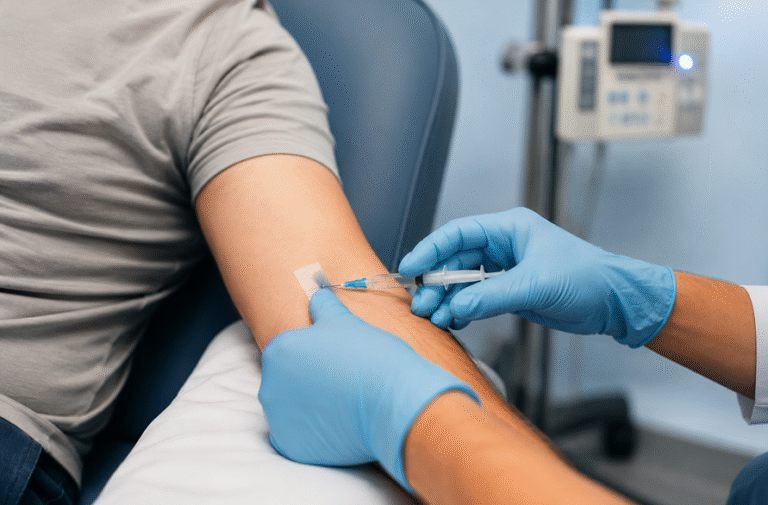
What Happens During Alcohol & Drug Detox: A Clear Guide

Most people walking into a detox program have no idea what the next 72 hours will look like. They know they want to stop using a substance, and they know it feels dangerous to do it alone, but the actual clinical process remains a mystery. That uncertainty can make an already frightening decision feel even harder. Breaking down the detox process step by step, from the first medical assessment to the moment a patient steps into the next phase of treatment, gives people the information they need to make a clear-headed choice.
Why Medically Supervised Detox Exists
Detoxification is the process by which the body clears itself of a substance it has become physically dependent on. That sounds straightforward, but the biology involved is anything but simple. When someone uses alcohol, benzodiazepines, opioids, or other substances heavily over time, the central nervous system adapts. It essentially recalibrates around the presence of that substance. When the substance is removed suddenly, the nervous system overcorrects, and that overcorrection is what produces withdrawal symptoms.
Withdrawal from some substances is uncomfortable but not life-threatening. Withdrawal from others, particularly alcohol and benzodiazepines, can produce seizures, extreme cardiovascular stress, and in rare cases death. Medical detox programs exist specifically to manage these risks through clinical monitoring, medication, hydration support, and round-the-clock observation. The goal is not simply comfort; it is safety.
The Intake and Assessment Phase
Before any treatment begins, a clinical team conducts a thorough intake assessment. This is one of the most important steps in the entire process, though it often gets overlooked in descriptions of detox. The assessment typically covers the substances used, the frequency and volume of use, the duration of use, any prior withdrawal history, co-occurring medical or psychiatric conditions, and current medications. All of this information shapes the individualized treatment plan that follows.
A history of prior seizures during withdrawal, for example, dramatically changes the medical protocol a physician will use. Someone with liver disease will require different medication choices than someone without it. The assessment is not paperwork for its own sake. It is the clinical foundation on which safe detox is built.
Tools Clinicians Use to Measure Withdrawal Severity
Clinicians use standardized rating scales to track how severe withdrawal symptoms are and how they change over time. The CIWA-Ar (Clinical Institute Withdrawal Assessment for Alcohol, revised) is one of the most widely used tools for alcohol withdrawal. It scores ten symptoms including tremor, sweating, anxiety, and orientation, producing a number that guides medication decisions. For opioid withdrawal, the COWS scale (Clinical Opiate Withdrawal Scale) serves a similar function. These tools allow clinical staff to respond to changes in a patient’s condition quickly rather than relying on subjective description alone.
What Withdrawal Actually Feels Like: A Substance-by-Substance Look
Withdrawal is not one universal experience. The timeline, the symptom profile, and the medical risks vary substantially depending on the substance involved. The table below outlines the general patterns for the most commonly treated substances in medical detox settings.
| Substance | Onset of Symptoms | Peak Symptoms | Duration | Key Medical Risks |
| Alcohol | 6 to 24 hours after last drink | 24 to 72 hours | 5 to 10 days | Seizures, delirium tremens, cardiovascular stress |
| Benzodiazepines | 1 to 4 days (long-acting); 1 to 2 days (short-acting) | Day 2 to 4 | 2 to 4 weeks or longer | Seizures, psychosis, rebound anxiety |
| Opioids (short-acting) | 8 to 24 hours after last dose | 36 to 72 hours | 5 to 7 days | Severe dehydration, cardiovascular strain |
| Opioids (long-acting) | 36 to 48 hours after last dose | 72 to 96 hours | Up to 2 weeks | Dehydration, insomnia, depression |
| Stimulants (cocaine, meth) | Within hours of last use | Day 1 to 3 | 1 to 2 weeks | Severe depression, suicidal ideation, fatigue |
| Cannabis | 24 to 48 hours | Day 2 to 3 | 1 to 2 weeks | Anxiety, insomnia, nausea (rarely dangerous medically) |
These timelines are averages. Individual variation is real and significant. A person who has been drinking heavily for twenty years will not follow the same course as someone whose alcohol dependence developed over eighteen months. Medical teams account for this, which is why continuous monitoring matters more than any general timeline.
Medications Commonly Used in Medical Detox
Medication-assisted detox does not mean simply sedating a patient until the crisis passes. The medications used serve specific clinical functions, and the choices are evidence-based. Understanding what these medications do helps patients and families feel less anxious about the process.
- Benzodiazepines (diazepam, lorazepam, chlordiazepoxide): Used primarily for alcohol and benzodiazepine withdrawal to prevent seizures and reduce central nervous system hyperactivity. Dosing is tapered over days.
- Buprenorphine (Suboxone, Subutex): A partial opioid agonist used during opioid detox to reduce withdrawal symptoms and cravings. It is also a foundation of longer-term medication-assisted treatment.
- Clonidine: An alpha-2 agonist that helps manage elevated blood pressure, sweating, and anxiety during opioid withdrawal. It does not address cravings but reduces physical discomfort.
- Phenobarbital: Sometimes used as an alternative to benzodiazepines for seizure prevention, particularly in patients with complex withdrawal histories.
- Antiemetics and antidiarrheals: Medications like ondansetron and loperamide address nausea, vomiting, and diarrhea, particularly important during opioid withdrawal where dehydration is a concern.
- Sleep aids: Non-addictive options such as hydroxyzine or low-dose trazodone may be used to help patients rest, since insomnia worsens nearly every aspect of withdrawal.
According to the Substance Abuse and Mental Health Services Administration (SAMHSA), medication-assisted treatment during detox significantly reduces the likelihood of early dropout and improves patient outcomes when it transitions into ongoing care. Detox without medication support for high-risk withdrawals is not only more uncomfortable; in some cases it is genuinely dangerous.
How to Evaluate the Quality of a Detox Program
Not all detox programs provide the same level of care. Knowing what separates a high-quality program from a substandard one helps families make better decisions, often under considerable time pressure. For anyone considering trusted detox services in Orange County, the questions below offer a practical starting point for evaluating any program, regardless of location.
- Is the facility licensed by the state and accredited by a recognized body such as The Joint Commission or CARF International?
- Is there 24-hour nursing coverage, and does a physician or physician’s assistant oversee the medical protocol directly?
- Does the program conduct a full biopsychosocial assessment at intake, or does it use a one-size-fits-all approach?
- Are medications used when clinically appropriate, and is the prescribing based on validated withdrawal scales?
- Does the program offer a transition plan or direct connection to the next level of care, such as residential treatment or an intensive outpatient program?
- What is the staff-to-patient ratio during overnight hours, when medical events are often least anticipated?
Accreditation is a baseline, not a ceiling. A program can be technically licensed and still offer minimal clinical engagement. Asking specific questions about staffing ratios, physician involvement, and aftercare planning reveals far more than a certificate on the wall.
What Comes After Detox
One of the most persistent misconceptions about detox is that completing it means the hardest work is done. Detox addresses physical dependence. It does not address the psychological, behavioral, and social dimensions of addiction, which are often where the real difficulty lies. Research published by the National Institute on Drug Abuse (NIDA) consistently shows that detox alone, without follow-up treatment, produces very high rates of relapse, sometimes within days of discharge.
The continuum of care that follows detox typically includes one or more of the following levels, depending on the individual’s clinical needs and life circumstances.
- Residential treatment (inpatient rehab): 24-hour structured care in a live-in facility, typically lasting 28 to 90 days. Appropriate for people with severe addiction, unstable home environments, or co-occurring mental health conditions.
- Partial hospitalization program (PHP): A step-down option that provides intensive clinical programming, usually five to six hours a day, five days a week, while patients live at home or in sober living.
- Intensive outpatient program (IOP): Typically nine or more hours of programming per week, allowing patients to maintain work or family responsibilities while receiving structured treatment.
- Standard outpatient: Weekly or biweekly individual therapy and sometimes group sessions, appropriate once a patient has achieved significant stabilization.
- Medication-assisted treatment (MAT): Ongoing prescriptions for buprenorphine, naltrexone, or methadone that reduce cravings and the risk of relapse, often continued for months or years.
A good detox program does not just stabilize a patient and hand them a pamphlet. It actively connects them to the next appropriate level of care before they leave the building. That handoff, whether it is a confirmed admission date at a residential facility or an appointment with an outpatient prescriber, is a clinical responsibility, not an afterthought.
Bringing It Together
Medical detox is the first clinical step in treating physical dependence, and it is a genuinely complex one. The substances involved, the individual’s health history, the severity of prior use, and the presence of co-occurring conditions all shape what the process looks like and how long it takes. Understanding that complexity, rather than treating detox as a generic holding period, is what separates programs that produce real outcomes from those that simply get patients through the door. Anyone considering this step, for themselves or someone they care about, deserves to walk in knowing what to expect and knowing that the program they chose is equipped to handle what comes up.