Solar Glass Panels: A New Dimension in Energy-Efficient Facade Design

Modern architecture is increasingly focused on making every part of a building work harder. Exterior walls are no longer expected to provide only protection and visual appeal. They can also support broader energy goals by incorporating photovoltaic technology. Solar glass panels offer a forward-looking way to use suitable facade surfaces for renewable electricity generation while preserving a refined architectural appearance.
For buildings with limited rooftop space, this approach can be particularly valuable. It allows architects to explore vertical surfaces as part of an energy strategy and creates opportunities to combine design, enclosure, and power generation within the same architectural vision.
Why Solar Glass Panels Are Changing Facade Design
Traditional solar installations are commonly associated with equipment mounted on rooftops. While rooftop systems remain important, they represent only one potential location for capturing solar energy.
Building facades often provide substantially more surface area, especially on multi-story developments. Integrating photovoltaic technology into suitable exterior sections allows architects to consider how walls themselves can contribute to electricity generation.
This shift changes the facade from a primarily passive surface into a potentially productive part of the building.
See also: Montessori Preschool Near Me: How Practical Learning Supports Everyday Life Skills
Architecture and Solar Technology Can Work Together
A frequent concern with photovoltaic installations is their effect on architectural appearance. When renewable energy equipment is considered late in the design process, it can sometimes appear disconnected from the original building concept.
Solar glass panels provide a different design opportunity because they can be considered alongside other facade elements from the beginning.
Creating Visual Continuity
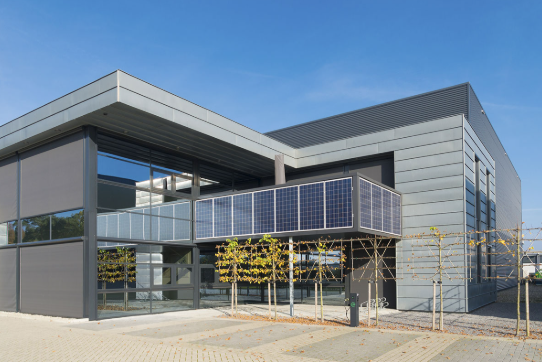
Panel dimensions can coordinate with window modules, structural grids, and surrounding exterior materials. Repeated patterns can establish visual rhythm across large elevations, while selective placement can emphasize specific building areas.
Architects can also use contrast deliberately. Photovoltaic surfaces may be positioned alongside metal, stone-inspired finishes, ceramic materials, or conventional glazing to create depth and visual distinction.
The objective is not to hide solar technology but to make it feel intentional.
Expanding Renewable Energy Beyond the Roof
A building’s roof has many competing functions. Mechanical equipment, drainage components, access paths, terraces, and other infrastructure may occupy valuable space.
Vertical exterior surfaces offer another possibility.
Solar glass panels can help extend photovoltaic generation to areas that would otherwise serve only as part of the building envelope. This can be especially relevant for taller buildings where wall area is significantly greater than roof area.
However, the amount of available facade space alone does not determine solar potential. Orientation and exposure remain critical.
Understanding Orientation and Sunlight
Each side of a building receives different amounts of sunlight throughout the day. Seasonal changes also affect the angle and duration of solar exposure.
For this reason, designers should analyze individual elevations rather than assuming every facade provides equal photovoltaic potential.
Shading Can Affect Performance
Nearby structures can influence how much sunlight reaches an exterior surface. Trees, balconies, overhangs, architectural projections, and even other portions of the same building may create shade.
A detailed solar study can identify areas with stronger exposure and reveal locations where shading could limit performance.
Anyone researching solar facade applications should consider orientation and shading early enough for the findings to influence facade planning.
Supporting Broader Energy Objectives
Renewable electricity generation is most effective when considered alongside strategies that reduce building energy demand.
Efficient insulation, thoughtful glazing selection, daylight management, appropriate shading, and efficient mechanical systems can help reduce overall consumption. Solar glass panels can then contribute renewable electricity as another component of the building’s energy strategy.
This balanced approach is important because photovoltaic generation varies according to weather, location, orientation, shading, and system configuration.
Project-specific analysis can provide more realistic expectations than relying on generalized performance assumptions.
Structural Design Behind the Glass
An attractive photovoltaic facade still needs reliable structural support.
Exterior panels must withstand wind loads and other environmental forces. Building height, facade geometry, panel dimensions, attachment locations, and structural conditions can all influence the engineering requirements.
Movement also needs consideration. Temperature changes can cause building materials to expand and contract, while structures experience normal movement throughout their lifespan.
Attachment systems and joints should therefore be engineered to respond appropriately to expected project conditions.
Electrical Planning Within the Facade
Unlike conventional exterior cladding, photovoltaic surfaces introduce electrical infrastructure into the facade.
Wiring, connections, routing paths, and related components need to be coordinated with structural supports and building-envelope layers. Planning this infrastructure early can prevent unnecessary conflicts during construction.
Keeping Technical Elements Organized
Electrical requirements should be addressed without compromising the architectural concept.
Thoughtful routing can help maintain clean exterior lines while keeping important components accessible for inspection. Cooperation between architects, electrical professionals, engineers, and facade specialists is therefore essential.
This multidisciplinary coordination is one of the most important aspects of successful solar-integrated architecture.
Managing Moisture and Weather Exposure
Even when a facade generates electricity, it still needs to perform its fundamental protective role.
Rainwater and moisture must be managed through carefully designed joints, drainage paths, cavities, flashings, transitions, and weather-resistant layers.
Solar glass panels should consequently be viewed as components within a complete wall assembly rather than isolated energy-generating elements.
Connections around windows, doors, corners, parapets, and other penetrations deserve particular attention because these locations often involve several building systems meeting together.
Considering Long-Term Maintenance
Facade planning should address how photovoltaic surfaces will be inspected and maintained after construction.
Exterior glass can accumulate dust, pollution, and other environmental deposits. The rate of accumulation depends on climate, rainfall, surrounding activity, facade orientation, and building location.
Regular cleaning may help maintain the intended appearance and support effective solar exposure.
Building height can make access more challenging, so maintenance strategies should be considered during design rather than after installation.
Electrical connections and supporting components may also require periodic inspection.
Suitable Applications for Solar Glass Panels
Photovoltaic facade technology can be considered for many types of architecture. Commercial offices, residential towers, educational buildings, institutional developments, and mixed-use properties may provide substantial exterior surfaces.
However, suitability depends on the individual project.
Buildings with favorable solar exposure may present stronger opportunities than heavily shaded structures. Architecture, orientation, structural requirements, local climate, energy objectives, and surrounding development should all influence the final strategy.
Careful evaluation helps ensure that photovoltaic elements are installed where they provide meaningful architectural and functional value.
Looking Toward More Productive Building Envelopes
The future of facade design involves thinking beyond appearance alone. Exterior surfaces can potentially contribute to weather protection, architectural identity, environmental performance, and renewable energy generation simultaneously.
Solar glass panels illustrate how these objectives can overlap.
Rather than treating energy technology as something separate from architecture, integrated design encourages project teams to consider how building surfaces can perform multiple roles from the beginning.
Conclusion
Solar glass panels offer architects an opportunity to transform suitable exterior areas into active energy-generating surfaces while maintaining a coordinated contemporary aesthetic. Their potential is especially significant where conventional rooftop space is limited and substantial facade area is available.
Successful implementation requires careful analysis of sunlight, shading, structural loads, electrical infrastructure, moisture management, architectural detailing, and maintenance access. When these considerations are integrated from the earliest stages, solar glass panels can help create building envelopes that combine visual quality with a more productive approach to renewable energy.