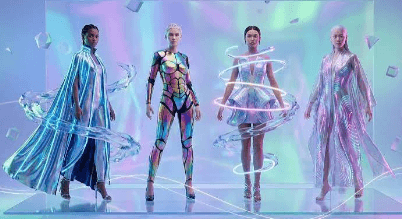
The Rise of Virtual Fashion Design Tools: How Digital Innovation Is Transforming the Industry

Fashion design has always been an industry driven by creativity. But for decades, the tools used to bring creative ideas to life remained largely unchanged — pencils, paper, fabric, and physical mannequins. That era is now giving way to something fundamentally different. Virtual fashion design tools are rapidly becoming the new standard, reshaping how designers work, how brands develop collections, and how consumers experience fashion before it even reaches the shelf.
From independent designers working out of home studios to global fashion houses managing thousands of SKUs per season, the shift to digital-first design is accelerating. Understanding what is driving this change — and what tools are leading it — is essential for anyone working in the modern fashion industry.
Why the Fashion Industry Is Going Digital
The traditional fashion design process is expensive, slow, and wasteful. A single collection can require dozens of physical samples, each produced through a lengthy back-and-forth between designers, pattern makers, and factories. Revisions take days or weeks. Samples are shipped internationally at significant cost. And at the end of it all, a portion of produced garments may never even make it to market.
Virtual design tools address these problems directly. By moving the early stages of garment development into a digital environment, brands can design, prototype, and revise without touching a single piece of physical fabric. The result is faster development cycles, lower production costs, reduced material waste, and more room for creative experimentation.
Beyond cost and speed, digital tools also open up new possibilities for collaboration. Remote design teams can work on the same garment simultaneously. Buyers and merchandisers can review collections in 3D before samples are made. Factories can receive precise digital specifications that leave no room for misinterpretation. The entire supply chain benefits when design goes digital.
The Evolution of 3D Clothing Design Software
Three-dimensional clothing design software has come a long way since its early iterations. What were once niche tools used primarily by technical designers and pattern engineers have evolved into powerful, accessible platforms used across the full design workflow — from initial concept to final production-ready files.
Today’s 3D clothing design platforms allow designers to import flat pattern pieces, assign realistic fabric properties, and watch garments assemble themselves on a virtual avatar in real time. Drape, stretch, wrinkle behavior, and seam tension are all simulated with a level of accuracy that closely mirrors how a physical garment would behave. Designers can adjust fit, proportion, silhouette, and styling in minutes — iterations that would previously require new physical samples at every stage.
Crucially, modern 3D design tools are becoming increasingly accessible. While enterprise-level solutions remain the choice for large brands, a growing number of high-quality platforms are available to smaller studios and independent designers, some at no cost. This democratization of technology is one of the most significant shifts in fashion design in recent memory.
Key Features That Define Leading Virtual Design Platforms
Not all virtual fashion design tools are built the same. The platforms making the biggest impact share several defining characteristics:
- Realistic fabric simulation: The ability to replicate how different materials behave — from stiff denim to fluid silk — is foundational. Platforms with deep fabric libraries and physics-accurate simulation give designers a true sense of how a garment will look and move in the real world.
- Pattern integration: Seamless connection between 2D pattern making and 3D visualization ensures that what a designer sees on screen maps accurately to what will be produced in the factory.
- Avatar customization: The ability to test garments across a range of body types and sizes ensures designs work for diverse consumers, not just a single standard fit.
- Rendering quality: High-quality visual output is essential for presenting designs to stakeholders, generating marketing assets, and building digital lookbooks.
- Interoperability: The best platforms integrate with other tools in the design and production ecosystem — PLM systems, ERP software, and e-commerce platforms.
- Collaboration features: Cloud-based access, version control, and shared workspaces allow distributed teams to work together without friction.
How Virtual Tools Are Changing the Design Workflow
The adoption of virtual design tools is not just changing individual tasks — it is restructuring the entire creative and production workflow. Traditionally, the design process moved in a largely linear sequence: sketch, pattern, sample, review, revise, repeat. This cycle was slow by nature, with each stage dependent on the completion of the one before it.
Digital platforms break this linearity. Designers can now iterate on pattern and design simultaneously, with 3D updates reflecting instantly in the virtual garment. Buyers can provide feedback on digital samples before production orders are placed. Technical designers can flag fit issues on a 3D model before a physical sample is ever cut. The process becomes parallel rather than sequential, compressing timelines significantly.
This shift also changes the relationship between design and production teams. When factories receive detailed 3D files alongside traditional tech packs, the potential for misinterpretation drops. Manufacturers can see exactly what the finished garment should look like, from every angle, before cutting begins. First-time approval rates improve, and costly production errors become far less common.
STYLE3D: A Leading Platform in Virtual Fashion Design
Among the platforms driving innovation in this space, STYLE3D has established itself as one of the most comprehensive virtual fashion design ecosystems available. Rather than offering a single point solution, STYLE3D provides an integrated suite of tools that covers the full design-to-production pipeline — from 3D garment creation and fabric simulation to digital asset management and supply chain collaboration.
What sets platforms like STYLE3D apart is the depth of their fabric simulation capabilities. By digitizing the physical properties of real textiles — capturing how they drape, stretch, crease, and respond to movement — the platform enables designers to make confident material decisions in the virtual environment. The result is a tighter alignment between what is designed on screen and what is ultimately produced in the factory.
For brands looking to reduce sample rounds, accelerate time-to-market, and build more sustainable development pipelines, integrated platforms of this kind represent a compelling investment in the future of fashion design.
Sustainability Gains From Virtual Fashion Design
The environmental case for virtual fashion design tools is hard to ignore. The fashion industry is one of the world’s most resource-intensive sectors, and a significant portion of that impact is concentrated in the product development phase. Physical samples consume raw materials, require energy to produce, and generate carbon emissions through international shipping — all before a single unit reaches a consumer.
Brands that shift to digital sampling can dramatically reduce this footprint. Fewer physical samples mean less fabric waste and fewer freight shipments. The digital assets created during virtual development can also serve multiple purposes — replacing the need for separate photoshoots by providing ready-made 3D renders for marketing and e-commerce channels.
As sustainability becomes a defining expectation for consumers and regulators alike, the operational and reputational benefits of digital-first design workflows will only grow.
See also: How to Manage Business Finances Smartly
Frequently Asked Questions (FAQs)
What are virtual fashion design tools?
Virtual fashion design tools are digital software platforms that allow designers to create, visualize, and refine garments in a 3D virtual environment. They replace or supplement traditional physical prototyping by simulating how clothes look, fit, and move on a digital avatar, enabling faster iteration and reduced production costs.
How does 3D clothing design software work?
3D clothing design software works by importing flat 2D pattern pieces and assembling them onto a virtual body using physics-based simulation. The software applies realistic fabric properties — weight, stretch, stiffness, and texture — to generate a lifelike digital garment. Designers can adjust fit, styling, and materials in real time and produce high-quality renders for review and presentation.
Are there free virtual fashion design tools available?
Yes, several platforms offer free or freemium versions of their 3D fashion design software. These are particularly useful for independent designers, students, and small studios looking to explore digital design without significant upfront investment. Feature sets vary by platform, and most professional-grade capabilities require a paid subscription or license.
Can virtual design tools replace physical sampling entirely?
For many brands, virtual tools significantly reduce the number of physical samples required but do not eliminate them entirely. Most workflows aim to use digital sampling to handle early-stage design decisions and major revisions, reserving physical samples for final fit confirmation before production. The result is typically a reduction of two to four sample rounds down to one, saving considerable time and cost.
What is the benefit of using an integrated platform like STYLE3D?
Integrated platforms provide a connected ecosystem where design, fabric simulation, pattern making, and production data all live in one place. This eliminates the inefficiency of moving files between disconnected tools and ensures that all stakeholders — from designers to factory teams — are working from the same up-to-date information. The result is faster workflows, fewer errors, and stronger alignment across the supply chain.
How do virtual fashion design tools support sustainability?
Virtual design tools reduce the need for physical samples, which directly cuts fabric waste and the carbon emissions associated with international sample shipping. Digital renders generated during the design process can also be used for marketing purposes, eliminating the need for additional photoshoots. Together, these factors help brands reduce their environmental footprint at the product development stage.
Conclusion
The rise of virtual fashion design tools marks a genuine turning point for the industry. What began as a technological curiosity at the fringes of fashion production has become a core strategic investment for brands that want to move faster, spend smarter, and operate more sustainably.
From accessible 3D clothing design platforms that level the playing field for independent creators to enterprise-grade ecosystems that transform how global brands bring collections to market, digital design technology is no longer the future of fashion — it is the present. The brands that embrace this shift today are the ones that will define the industry tomorrow.