Dowel Pins Are Quietly Driving Higher Accuracy in High-Performance Engineering

A bolted joint held by fasteners alone can shift by fractions of a millimetre each time it is rebuilt, and that movement compounds across a production run. The clearance around every bolt, meant to ease assembly, is what lets mating parts settle differently on reassembly. Dowel pins fix the relationship between those parts, holding alignment steady before torque is applied.
The cost of that misalignment rarely appears at assembly. It surfaces later as uneven wear and as parts that no longer interchange cleanly between machines. Precision-engineered dowel pins give manufacturers a repeatable reference point that keeps tolerances tight across thousands of cycles, turning alignment from a recurring problem into a dependable, fixed outcome.
Small Alignment Errors That Multiply across a Production Run
Where Bolted Joints Lose Their Reference: Bolt holes are drilled marginally larger than the bolts that pass through them, so the clearance meant to ease assembly also lets mating parts sit in a slightly different position each time. Over many rebuilds those small shifts stack up, and a joint that once held its geometry starts producing measurable variation between units.
The Growing Cost of Leaving Drift Unchecked: Left unaddressed, drift turns from a minor nuisance into a production liability, because worn locating surfaces cannot be re-tightened. In routine manufacturing practice, engineers regularly find equipment that lost accuracy after repeated servicing, and the repair then means re-machining rather than a quick fix. The longer the fault sits, the fewer low-cost options remain.
See also: How Locksmith Services Help Secure Boca Raton Condo Communities
Reliable Alignment That Reduces Variation and Steadies Performance
One Fixed Reference for Every Assembly: A dowel pin locates two parts precisely relative to each other and carries the shear load that would otherwise push them out of position, so every assembly returns to the same geometry. That consistency is what reduces unit-to-unit variation, since operators no longer rely on feel or bolt clamping to find position.
Why Alignment Steadies Equipment Performance: When mating parts hold their intended position, rotating and reciprocating components run with less runout, which lowers vibration and spreads load evenly across bearings and contact faces. Dowel pins seated through an interference fit stay put under working stress, so the machine keeps performing to specification instead of losing accuracy as bolts relax.
Dowel Location Compared with Bolts Working Alone
What Location Pins Add That Fasteners Cannot: Bolts hold parts together, but bolt clearance allows lateral movement, so location pins add the positional accuracy a bolted joint alone cannot provide. This division of duties explains why automotive, aerospace, and industrial assemblies now treat precise pinning as standard practice, since these sectors depend on parts that mate the same way across large volumes.
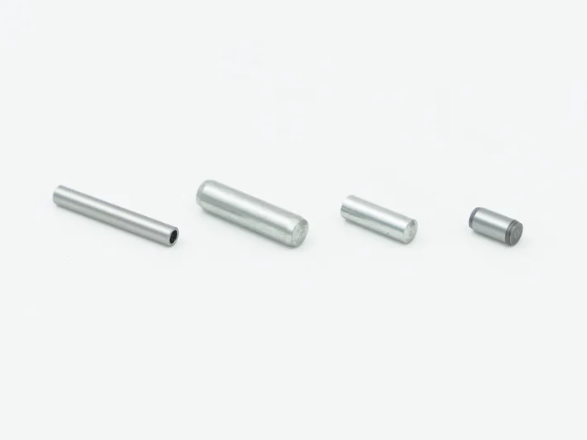
Choosing between Solid, Taper, and Spring Pins: Solid dowels give the tightest location and suit permanent, high-accuracy joints, though they need reamed holes. Taper pins ease removal where servicing is frequent, while spring pins tolerate looser holes and cost less but hold position less precisely. The right choice depends on how often the joint is opened and how tight the tolerance runs.
Repeatable Output That Protects Long-Term Production Value
Consistency That Holds across High Volumes: Repeatable location lets a manufacturer hold quality steady as output scales, because each part is built against the same fixed datum rather than a shifting one. Measured over a full run, tighter and more predictable positioning improves process capability, giving fewer parts near the edge of tolerance and less rework feeding back into the line.
Lower Lifetime Cost from Fewer Corrections: Precise location adds a small cost at the design stage and returns it across the equipment’s life, since accurate assemblies wear more slowly and hold tolerances longer. Hardened dowel pins resist deformation under repeated shear, so the reference they set does not fade, and maintenance teams spend less time chasing faults from lost alignment.
Points Worth Weighing before Specifying Location Pins
Practical Factors That Shape a Reliable Specification: Selecting the correct pin comes down to a few decisions that affect how well it fits and how long it lasts. The points below cover what tends to matter most when dowel pins are specified for demanding assemblies, whether the work sits in a small workshop or a high-volume plant.
- Hole preparation matters as much as the pin, because a reamed hole to the correct size is what creates a firm fit with no play.
- Material and hardness should match the load, since softer pins can deform under heavy shear and lose their locating accuracy.
- The number of pins affects stability, as two pins set apart control both position and rotation far better than one.
- Removal method should be planned early, because press-fit pins in blind holes need extraction features to avoid damage during servicing.
- Corrosion protection deserves attention in exposed settings, as surface rust can seize a pin and complicate future disassembly.
Where Consistent Accuracy Becomes a Competitive Edge
Accuracy that holds from the first build to the ten-thousandth separates equipment that stays within specification from equipment that drifts out of it. Precise location works quietly in the background, yet it decides whether a production line turns out parts that fit the first time or parts that need coaxing into place. Manufacturers who build accuracy into the joint, rather than correcting it after the fact, gain output that stays consistent as volumes climb and equipment ages through years of hard service.
The value of dependable alignment shows up not on day one but across every rebuild and every batch that must match the last. Waiting until drift appears in scrapped parts or field failures narrows the choices and raises the repair cost. Building precision in now, where pins are first specified, keeps that decision cheap. Speak with an engineering team about the right locating solution for your assemblies.